
AGENTS.md
AGENTS.md
Guidance for LLM coding agents (Claude, Cursor, etc.) working in this repository.
Also exposed as CLAUDE.md (symlink) for tools that look for that filename.
Keep this file in sync when the build/deploy workflow or dependencies change.
1. What this project is
srombauts.fr is Sébastien Rombauts’ personal programmer blog, a static site
generated by Jekyll and hosted on GitHub Pages
under the custom domain srombauts.eu (see CNAME). The GitHub repository name
is still srombauts.fr (kept for now), only the live custom domain has moved
from .fr to .eu.
- Source repo: https://github.com/SRombauts/srombauts.fr
- Live site: http://srombauts.eu
- Default branch:
master(also the GitHub Pages publishing source) - Content language: English, locale
en-US, timezoneEurope/Paris
Work in progress. This is a resurrection of the author’s old WordPress blog (2010–2018), recovered from the Wayback Machine. Seed snapshot: https://web.archive.org/web/20180419132242/http://www.srombauts.fr/. Several older posts are still stubs that only link to their archived copy; they are being restored to full content progressively, so expect placeholder posts alongside finished ones.
The site does not use a custom GitHub Actions workflow. It relies on the
“legacy” GitHub Pages branch-based build: every push to master triggers an
automatic Jekyll build on GitHub’s infrastructure.
Editorial intent and audience
This blog doubles as a professional portfolio. Alongside the casual howto/tutorial posts, it serves as durable, verifiable evidence of past work: open-source projects, Unreal/Unity tooling, and an earlier embedded/FPGA/real-time career. Write accordingly.
- Prefer substance and accuracy over post count. A post a technical reader might see should be specific and checkable, not filler.
- Verify technical claims against the actual repositories and their real dates before stating them. Do not invent specifics; if a fact only lives in the author’s memory or CV, keep the post honest and high-level, or ask.
- Do not silently backdate. The blog’s first real post is
2010-09-07. Material from before 2010 (the embedded/FPGA career, etc.) is written as an openly retrospective piece, dated to a real milestone, with a short note (a footnote in the existingedit:style) saying the write-up itself is recent. - A blog-era project that genuinely dates from 2010–2018 may use its real milestone date with a brief retrospective note, since the blog did exist then.
2. Repository layout
srombauts.fr/
├── _config.yml          # Jekyll + minimal-mistakes site configuration
├── _data/
│   └── navigation.yml   # Top navigation menu items
├── _pages/              # Standalone pages (about, portfolio, 404, archives, sitemap)
├── _posts/              # Blog posts: YYYY-MM-DD-title-slug.markdown
├── assets/
│   └── images/          # Image assets referenced from posts/pages
├── index.markdown       # Site home, uses layout: home
├── favicon.ico
├── CNAME                # Custom domain ("srombauts.eu"); leave it alone
├── Gemfile              # Ruby gem manifest (github-pages + plugins)
├── Gemfile.lock         # Pinned gem versions (DO NOT hand-edit)
├── .gitignore           # Ignores _site, .sass-cache, .jekyll-cache, vendor, ...
├── .editorconfig        # 2-space indent, LF, UTF-8, final newline
├── README.md            # Short public README
└── CLAUDE.md            # This file
There is no _layouts/, _includes/, _sass/ or assets/css/ directory in
the repo: those come from the remote theme (see §3) and are pulled in at
build time. If you need to override a layout/include, add a file with the same
relative path locally and Jekyll will use the local copy.
Where to put new content
| Goal | Location | Front matter layout |
|---|---|---|
| New blog post | _posts/YYYY-MM-DD-slug.markdown |
inherited (single) |
| New static page | _pages/slug.markdown |
single |
| Image used in a post/page | assets/images/foo.png |
n/a |
| Site-wide navigation entry | _data/navigation.yml |
n/a |
_pages/ is included in the build via the include: list in _config.yml.
Each page sets its own permalink: in front matter.
3. Tech stack and pinned versions
| Component | Version (Gemfile.lock) | Notes |
|---|---|---|
| Jekyll | 3.9.2 | Pulled in by github-pages |
github-pages |
227 (Jul 2022) | Bundles all gems GitHub Pages supports |
| Ruby (target) | 2.7.x recommended | github-pages v227 predates official Ruby 3.x support (added in v229, Feb 2024) |
| Theme | mmistakes/minimal-mistakes@4.24.0 |
Loaded via remote_theme |
| Markdown engine | kramdown (GFM) | _config.yml -> markdown: kramdown |
| Syntax highlight | rouge 3.26.0 | |
| Search | lunr (client-side) | search: true, search_provider: lunr |
| Permalink style | pretty (/YYYY/MM/DD/slug/) |
|
| Bundler | 2.3.25 | From BUNDLED WITH in Gemfile.lock |
Active Jekyll plugins (_config.yml plugins: and Gemfile):
jekyll-paginate, jekyll-sitemap, jekyll-feed, jemoji, jekyll-include-cache.
Important compatibility notes
- The
github-pages227 gem locks Jekyll 3.9.2 and is intended for Ruby 2.7.x. Newer Ruby 3.x can work but you may need workarounds (e.g.bundle add webrick). GitHub Pages itself (perhttps://pages.github.com/versions.json) currently serves withgithub-pages232 / Ruby 3.3.4. If you bump the gem to keep up with production GitHub Pages, regenerateGemfile.lock:bundle update github-pages - The theme is consumed via
remote_theme:. Do NOT addgem "minimal-mistakes-jekyll"to theGemfileunless you also removeremote_theme:and commit to a different installation flow. jekyll-include-cacheMUST stay both in theGemfileplugin group AND in_config.yml’splugins:list. Without it, the theme errors out withUnknown tag 'include_cached'.
4. Setting up a local dev environment on Ubuntu Linux
These instructions target Ubuntu 24.04 LTS (Noble) and 22.04 LTS (Jammy), including WSL2. Pick one of the two paths below.
4.A Recommended path: rbenv + Ruby 2.7.8 (matches github-pages 227)
This is the most reliable approach because it uses a Ruby version aligned with
the locked Gemfile.lock.
# 1. Install build prerequisites
sudo apt update
sudo apt install -y \
    git curl autoconf bison build-essential \
    libssl-dev libyaml-dev libreadline-dev zlib1g-dev libncurses5-dev \
    libffi-dev libgdbm-dev libdb-dev libgmp-dev \
    libsqlite3-dev libxml2-dev libxslt1-dev

# 2. Install rbenv + ruby-build
curl -fsSL https://github.com/rbenv/rbenv-installer/raw/HEAD/bin/rbenv-installer | bash
echo 'export PATH="$HOME/.rbenv/bin:$PATH"' >> ~/.bashrc
echo 'eval "$(rbenv init -)"' >> ~/.bashrc
exec bash   # reload shell

# 3. Install Ruby 2.7.8 and pin it for this repo
cd ~/srombauts.fr
rbenv install 2.7.8
rbenv local 2.7.8        # writes .ruby-version (gitignored if desired)
ruby --version           # => ruby 2.7.8

# 4. Install Bundler matching Gemfile.lock and project gems
gem install bundler -v 2.3.25
bundle config set --local path 'vendor/bundle'   # keep gems in repo, vendor/ is gitignored
bundle install
Then jump to §5 for daily commands.
4.B Quick path: system Ruby (Ubuntu’s ruby-full, currently Ruby 3.2)
Acceptable for casual edits, but expect occasional warnings or the need to update gems. If you just want to preview a content change, this is fine.
# 1. Install Ruby + build tools
sudo apt update
sudo apt install -y ruby-full build-essential zlib1g-dev

# 2. Install gems into your home directory (avoid sudo for `gem install`)
echo '# Install Ruby Gems to ~/gems' >> ~/.bashrc
echo 'export GEM_HOME="$HOME/gems"' >> ~/.bashrc
echo 'export PATH="$HOME/gems/bin:$PATH"' >> ~/.bashrc
source ~/.bashrc

# 3. Install Jekyll + Bundler
gem install jekyll bundler

# 4. Install project dependencies
cd ~/srombauts.fr
bundle install
# Ruby 3.x note: webrick is no longer in the stdlib. If `jekyll serve` errors
# with a webrick LoadError, run:
#   bundle add webrick
If bundle install fails on Ruby 3.x because github-pages 227 transitive
deps are too old, run bundle update github-pages to bump to a Ruby-3-friendly
version (see §3 caveat).
Common WSL2 caveats
- Always edit files inside the WSL filesystem (
~/srombauts.fr), not under/mnt/c/..., otherwise file watching and--livereloadare unreliable. - To make the dev server reachable from Windows, either use
localhost:4000directly (works on recent WSL) or bind explicitly:bundle exec jekyll serve --host 0.0.0.0.
5. Local development commands
Run all commands from the repo root (/home/srombauts/srombauts.fr).
# Install / refresh dependencies
bundle install

# Build & serve at http://localhost:4000 with auto-rebuild on changes
bundle exec jekyll serve

# Same, with live-reload in the browser
bundle exec jekyll serve --livereload

# Include drafts (any file in a _drafts/ folder, no date in name)
bundle exec jekyll serve --drafts

# Production-like build into ./_site (one-shot, no server)
JEKYLL_ENV=production bundle exec jekyll build

# Clean the build output and Jekyll caches
bundle exec jekyll clean

# Update github-pages and all transitive gems to match GitHub's current build
bundle update github-pages
Reminders:
- Editing
_config.ymlrequires restartingjekyll serve; it is not picked up by the watcher (this is documented at the top of_config.yml). - The default permalink for posts is
/:year/:month/:day/:title/(permalink: pretty). - Generated artifacts (
_site/,.jekyll-cache/,.sass-cache/,vendor/) are gitignored. Never commit them.
6. Authoring conventions
Blog post
Filename: _posts/YYYY-MM-DD-kebab-case-title.markdown
Minimal front matter:
---
title:  "My post title"
date:   2026-04-27 12:00:00 +0200   # optional; filename date is used otherwise
tags:
  - some-tag
  - another-tag
---
The post layout, author_profile, read_time, share, related, etc. are
inherited from the defaults: block in _config.yml, so most posts only need a
title and tags. Add toc: true to enable a sidebar table of contents.
Page
Filename: _pages/something.markdown
---
layout: single
title: My Page
permalink: /something/
---
Useful Liquid shortcodes (provided by minimal-mistakes 4.24.0)
{% include video id="XTB7xq6rVC4" provider="youtube" %}
{% include figure image_path="/assets/images/foo.png" alt="alt" caption="cap." %}
These are defined in the remote theme’s _includes/ directory; do not redefine
them locally unless you want to override theme behaviour.
Images
Place files in assets/images/ and reference them with absolute root-relative
paths so they work both locally and on the deployed site:
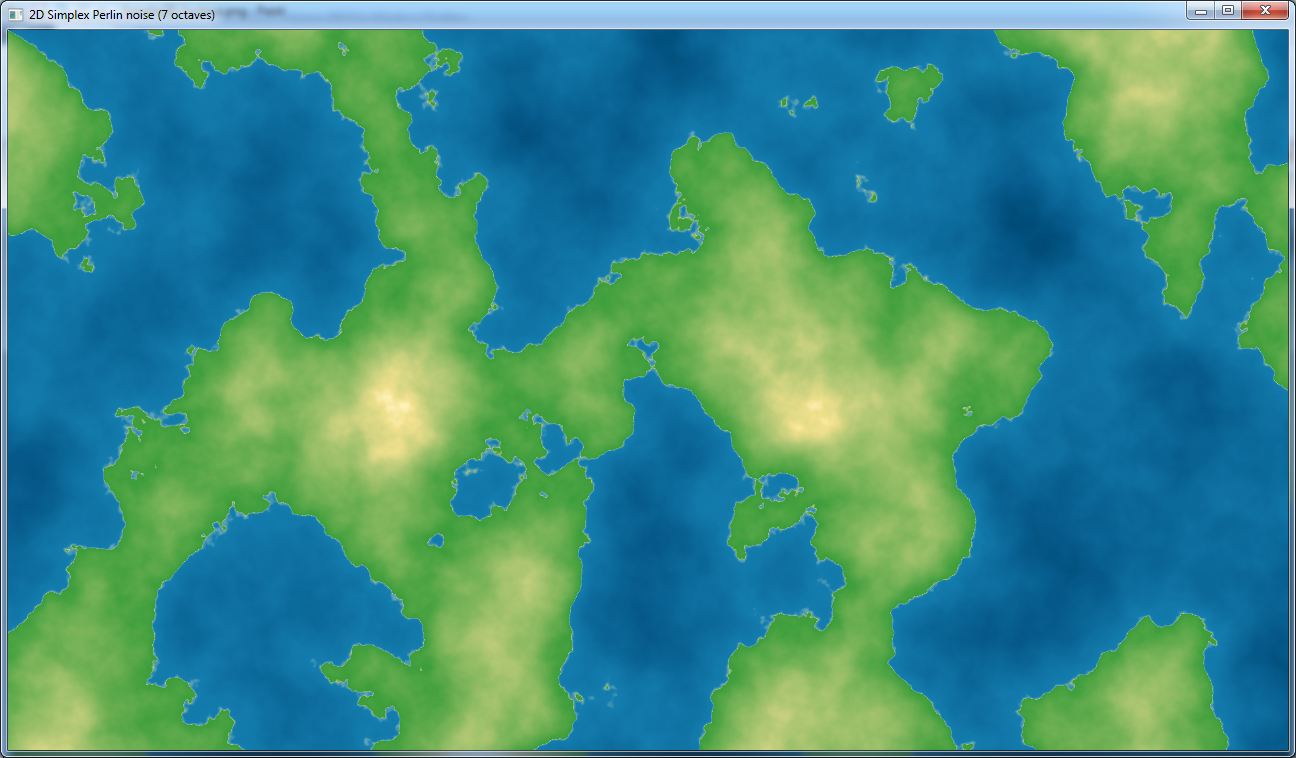
Favor a more compressed format than PNG for the web. PNG is large for photographic or smooth-gradient images; reserve it for screenshots with sharp text/edges, flat-color graphics, or images needing transparency. Otherwise prefer JPEG (photos, renders, noise/gradient fields) or WebP, which keep the page weight down with no visible loss.
edit: / note: lines and footnotes
Posts use short edit: prefixes for things added after the fact (a
long-standing repo convention, also seen capitalized as Edit: / Edit 2015:).
Common use: an inline forward link to a later related post (e.g.
edit: the next milestone is [...])
Similarly, note: is used for retrospective disclosure that points to
a kramdown footnote (note: [^1] in the body, with [^1]: ... defined near the
bottom of the file).
Keep each footnote definition on a single line. In kramdown (the Markdown
engine here), continuation lines of a footnote definition must be indented by four
spaces/one tab; an unindented soft-wrapped second line is parsed as a separate
paragraph after the footnote, so the wrapped text leaks into the page body instead
of staying in the footnote. Either keep the whole [^1]: ... definition on one
(long) line, or indent every continuation line by four spaces. The one-line form is
simpler and the convention used across the posts. This is the documented kramdown
rule, not a quirk: https://kramdown.gettalong.org/syntax.html#footnotes.
7. Build & deploy
There is no CI/CD workflow file in the repo (.github/workflows/ does not
exist). Deployment is handled entirely by GitHub Pages’ built-in Jekyll
pipeline.
Sequence on each push to master:
- You push commits to
origin/master. - GitHub Pages detects the push, runs Jekyll on a sandbox using the
github-pagesgem version GitHub currently bundles. - The result is published at
srombauts.eu(custom domain via theCNAMEfile at the repo root).
DNS for the custom domain is configured outside this repo (registrar / DNS
provider). The CNAME file content (srombauts.eu) is what tells GitHub
Pages which hostname to expect; do not modify it casually.
If you ever migrate to a custom GitHub Actions workflow:
- Move build to
.github/workflows/pages.ymlusingactions/jekyll-build-pagesactions/deploy-pages.
- Be aware that custom workflows ignore the
CNAMEfile at the repo root; the custom domain must instead be configured in repo Settings -> Pages.
8. _config.yml quick reference
The full file is the source of truth. Key knobs you may need to tweak:
| Key | Current value | Purpose |
|---|---|---|
title / subtitle |
SRombauts.fr / Comments from a developer |
Masthead text |
url |
http://srombauts.eu |
Canonical site URL |
baseurl |
"" |
Subpath; empty for apex domain |
repository |
SRombauts/srombauts.fr |
Used by jekyll-github-metadata |
remote_theme |
mmistakes/minimal-mistakes@4.24.0 |
Theme + version |
minimal_mistakes_skin |
dark |
Theme color skin |
search / search_provider |
true / lunr |
Client-side search |
permalink |
pretty |
/YYYY/MM/DD/slug/ |
timezone |
Europe/Paris |
Date rendering |
author: block |
name, avatar, bio, social | Sidebar profile card |
defaults: |
per-collection front matter | Avoids repetition in posts/pages |
To bump the theme: change the version after @ in remote_theme and rebuild.
Theme release notes: https://github.com/mmistakes/minimal-mistakes/releases.
9. Common pitfalls (read before debugging)
Liquid Exception: Unknown tag 'include_cached'—jekyll-include-cachemissing from eitherGemfileor_config.ymlplugins:.cannot load such file -- webrick— Ruby 3.x without webrick. Fix:bundle add webrick(then commitGemfile/Gemfile.lock).bundle installfails on Ruby 3.x with native extension errors — The pinned gems are old. Either install Ruby 2.7.8 via rbenv (§4.A) or runbundle update github-pages.- Edits to
_config.ymlnot visible — Restartbundle exec jekyll serve; the config is not auto-reloaded. - Post does not appear — Filename must start with a valid
YYYY-MM-DD-date that is not in the future (relative totimezone: Europe/Paris). Use--futureon the serve command if you really need to preview a future post. - Local layout looks different from production — Your local
github-pagesgem is likely older than what GitHub serves. Runbundle update github-pages. - CNAME removed after a deploy — Do not delete
CNAMEfrom the repo root while using the legacy branch-based publishing; it is read on every build.
10. House rules for AI agents editing this repo
- Preserve the 2-space indent / LF / UTF-8 / final newline policy from
.editorconfigfor all text files. - Do not commit
_site/,vendor/,.jekyll-cache/,.sass-cache/,.bundle/, or any*.bakfile. - Do not edit
Gemfile.lockby hand. To change pinned versions, editGemfileand runbundle install/bundle update <gem>. - When adding a post, use lowercase kebab-case in the filename and prefer a
small number of existing tags (
community,tools,unreal-engine,tutorial,vcs,github,astrophotography, …) before inventing new ones. - Place new images under
assets/images/and reference them with absolute paths (/assets/images/...). - Match the writing voice of existing posts: first person, casual, occasional
retrospective edits added as
edit:lines or footnotes.
Agent skills (.claude/skills/)
Reusable agent instructions live in .claude/skills/, one SKILL.md per skill. A
skill-aware tool (e.g. Claude Code) auto-loads each one from its description. Tools
without skill support should treat the baseline skills below as house rules. This list
names the mandatory skills and the editing rule; it is not a full catalogue, and each
skill’s own description defines its topic triggers. The baseline loading requirements below
apply to every discussion, even when local skills are absent from an agent’s skill catalogue.
agent-response-style(baseline for all interaction). Professional, factual, neutral tone with calibrated, peer-review-style challenge: compare alternatives, surface trade-offs and failure modes, do not merely validate. Applies to every task.career-planning(baseline for every discussion in this project). Read.claude/skills/career-planning/SKILL.mdat the start of every discussion, regardless of topic, including technical work, general questions and messages without an action request. Do not wait for a career-related keyword or explicit skill invocation. If already loaded in the active context, do not reload it. Read only the references relevant to the current request; do not redirect unrelated work into career advice.humanizer(mandatory only for human-facing English project prose). Run it when creating or modifying prose intended for human readers, such as a blog post, site page, public README or Git commit message. Do not run it for question answering, code or prose reviews, internal instructions, skill files or code comments. It is a vendored third-party skill: never edit it, so it can be re-synced from upstream. Its “no em dashes” rule governs the prose on which it is run.boileau(mandatory only for human-facing French project prose when available). Run it when creating or modifying French prose intended for human readers, including a French Git commit message. Do not run it merely because the conversation is in French, or when answering questions, reviewing modifications, or editing internal instructions or skill files. Preserve the language used by the surrounding document. Do not replace French with English or remove accents to satisfy an ASCII preference. It is vendored: never edit it locally.- Choose the writing skill by the deliverable’s language, not the conversation’s language.
Use
boileaualone for French andhumanizeralone for English; do not run both on the same passage. For bilingual prose, apply each skill to its corresponding passages. These rules also cover drafted messages intended to be sent to another person, even when delivered only in chat. When reporting skill usage, distinguish consulting a skill from applying its procedure. Do not claim full application after a truncated read; retrieve the missing instructions first. skill-maintenance(when editing skills). Conventions for files under.claude/skills/**. Read it before creating or changing any skill.
Commit workflow
- After completing any change, always commit it automatically. Do not wait for the user to ask.
- Use a short, descriptive commit message (single line, imperative or
descriptive, no conventional-commit prefix), matching the style of the
existing history. Inspect it first with
git log --oneline(e.g.Ignore ".vs" directory,Fix link to the drone post,Bump github-pages gem to match production). - Stage only the files relevant to the change; never commit
_site/,vendor/,.jekyll-cache/,.sass-cache/,.bundle/, or*.bak. - Do not push to
origin/masterunless the user explicitly asks for it (pushing triggers a live deploy via GitHub Pages).
11. Useful external references
- Jekyll docs: https://jekyllrb.com/docs/
- Jekyll on Ubuntu: https://jekyllrb.com/docs/installation/ubuntu/
- GitHub Pages dependency versions: https://pages.github.com/versions/ (JSON: https://pages.github.com/versions.json)
github-pagesgem releases: https://github.com/github/pages-gem/releases- Minimal Mistakes theme docs: https://mmistakes.github.io/minimal-mistakes/docs/quick-start-guide/
- Minimal Mistakes 4.24.0 source: https://github.com/mmistakes/minimal-mistakes/tree/4.24.0
- Testing GitHub Pages locally: https://docs.github.com/en/pages/setting-up-a-github-pages-site-with-jekyll/testing-your-github-pages-site-locally-with-jekyll
- rbenv: https://github.com/rbenv/rbenv